
The fifteen steps for Hajj are

1. Miqat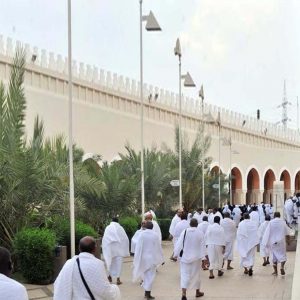
Miqat (Arabic: ميقات) refers to the boundary where it becomes necessary for pilgrims to adorn the Ihram garments and impermissible to pass except in the state of Ihram. Those who cross the boundary without having entered the state of Ihram must perform a sacrifice as expiation.
2. Ihram for Umrah
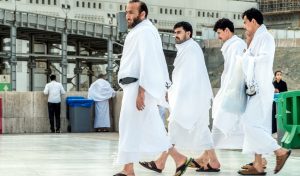
For men, this means wearing the designated white cloth with one piece wrapped around your shoulder and one around your waist. Ladies may wear any clothing of their choice but should ensure
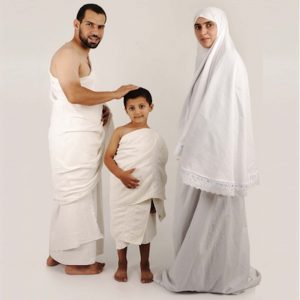
they observe the rules of Hijab. Face coverings, however, are not permitted. Fully covering shoes are also not permitted. Footwear must be in the form of sandals for both women and men.
3. Tawaf
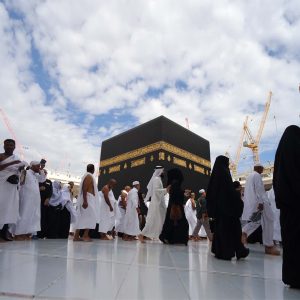
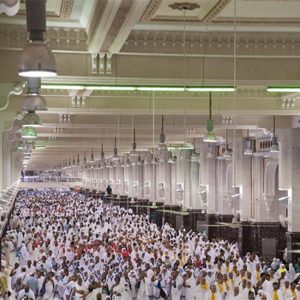
Tawaf is one of the principal rites of the pilgrimage and refers to walking in circles around the Kaa’bah in an anti-clockwise motion. One Tawaf is made up of seven complete circuits, with each one starting and ending at the black stone, which is situated within the Kaa’bah. In addition to your Tawaf, you can also offer voluntary prayers to thank Allah (SWT) for arriving safely and to mark the start of this incredibly special spiritual journey.
4. Sa’i (Safa and Marwa)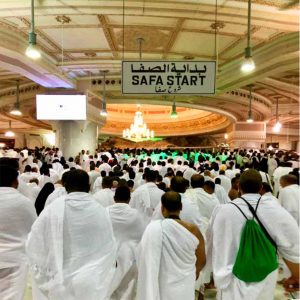
You’ll begin the Sa’i on the hill of Safa and walk towards the hill of Marwa. You will eventually see the green marker, at which point you will run until the next green marker and continue walking until you reach Marwa. This completes one lap. Your Sa’i is complete once you have performed a total of seven laps between the hills of Safa and Marwa. Once Sa’i is complete, men will have their hair clipped or shaved, whilst a woman clips her hair to the length of her fingertip. This marks the completion of your umrah, allowing you to leave Ihram, until the 8th of Dhul Hijjah.
5. Ihram for Hajj
Prior to wearing the Ihram attire, you should be in a state of physical purity and take care of your personal hygiene at home, as instructed by the Prophet (PBUH). You should then perform Ghusl, a highly recommended act for those intending to assume Ihram. It is Sunnah for every man, woman and child, including those women experiencing menses or post-natal bleeding, to bathe prior to donning the Ihram garments. A woman experiencing menstruation may fulfil all the rituals of Hajj except Tawafof the Kaaba and the two Rakahs of Nafl accompanying it. It is Makruh to neglect the Ghusl without a valid reason. If for whatever reason, Ghusl can’t be performed, Wudhu should be carried out.
6. Mabit in Mina
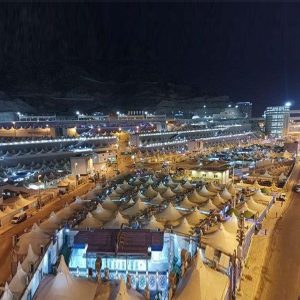
Once you arrive in the tent city (neighbourhood) of Mina, you’ll settle into your allocated tent. Here you’ll pray Salah (obligatory prayers), including Dhuhr, Asr, Maghrib, ‘Isha and Fajr, shortening your four-unit prayers to two units each, without combining them,as stated in the Qu’ran. You’ll spend the night and pray to Allah (SWT), reading the Qur’an and preparing for day two. It’s an important time for spiritual reflection and devotion, so try and make the most of this special night.
7. Wukuf in Arafah
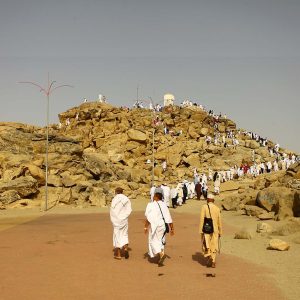
After sunrise in Mina, you’ll then head to the plains of ‘Arafah, reciting Istaghfar (asking for forgiveness) and making supplications – marking the Day of ‘Arafah when we ask Allah (SWT) for forgiveness for our sins. Upon reaching the plains of Mount ‘Arafah, pilgrims observe shortened Dhuhr and Asr prayers combined (two rakat instead of four). However, according to Abu Hanifa, the combining of Dhur and Asr is only valid if one prays behind the Imam in the Masjid. Therefore, if one was to pray in the tent, then they should not combine both salah. On this day, there will be a sermon delivered from Masjid al-Nimra on Mount ‘Arafah. Try to listen to the Khutbah (sermon) if possible. Your group may also facilitate a translation of this sermon in English.
8. Mabit in Muzdlifah
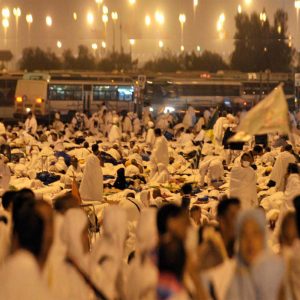
After sunset, you’ll depart ‘Arafah and head to Muzdalifah – an open plain between Mina and ‘Arafah. Once you reach Muzdalifah you’ll perform your Maghrib and ‘Isha Salah, one after the other, shortening the ‘Isha Salah to two Rakat. Afterward, you can then spend the night in worship or resting. The Prophet (PBUH) went to sleep until shortly before Fajr, choosing not to engage in night worship as he normally did. So, don’t be tempted to exhaust yourself but rest instead – you have a long day ahead of you! While in Muzdalifah, you may also collect pebbles to perform Rami (the stoning of the devil) over the next three days. The size of the pebbles should be like the size of date stones/seeds. You will need a total of 49 pebbles.
*However, it is advised that you pick up a further 21 pebbles as a precautionary measure to bring your total up to 70. *
9. Jamarats Aqabah
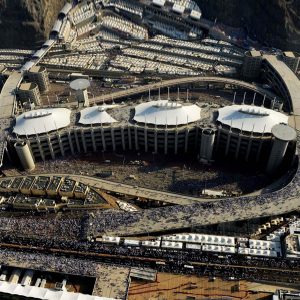
Once you reach the Jamarat, you will head to Jamarat al-Aqaba, which is the largest pillar, and here you will throw the first seven pebbles at the concrete pillar. You will only pelt this one pillar on the first day.
10.Tahllul
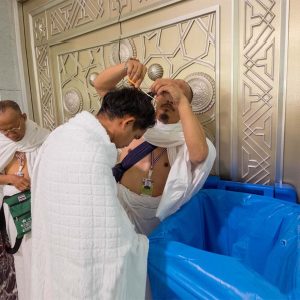
After offering the Hady, you will proceed to shave or trim your hair if you are male. The Prophet Muhammad (peace and blessings be upon him) shaved his hair and this is preferable. A woman trims her hair by the length of a fingertip.
11. Tawaf Ifadah and Sa’i
Tawaf Ifadah is the final Tawaf performed during the Hajj, and it takes place after the pilgrim has completed the rituals of the Day of Arafat and the following night at Muzdalifah. Tawaf Ifadah is performed around the Kaaba, the holiest site in Islam, seven times in a counterclockwise direction. It is a symbolic act of unity and submission to God.
12. Sa’i
Sa’i is obligatory. You must perform the Saai’ after the Rami, the Qurbani (sacrifice), and shaving (or trimming) of the head.
13. Mabit in Mina
Once your second Rami is completed, you will return to your camp in Mina and spend the rest of the day and night in worship, making the most of the remaining time you have.
14. Jamarats
On this occasion, you pelt each of the three pillars in order. You will begin with Jamarah al-Ula (the small pillar), then Jamarah al-Wusta (the second/middle pillar), and finally, Jamarah al-Aqaba (the third/large pillar). You stop after the first and second Jamarat to make Du’a face the qibla. Each one should be stoned with seven consecutive pebbles accompanied by the Takbir. Remember to take your spare pebbles with you in case you lose some!
15. Tawaf Wada’
You’ve now only one step left to perform before completing Hajj and departing from Makkah. The farewell Tawaf is the last rite Muslims must perform.

This Tawaf is Wajib (obligatory) according to Hanafis, Shafi’is, and Hanbalis but Sunnah according to Malikis and must be performed prior to leaving the boundaries of the Haram. Omitting this Tawaf, without a valid reason, is not deemed lawful in Islam.





6 Responses
Information’s are very much helpful.
JazakAllah
Assalamualaikum! Is it required to wear completely new clothes for women in Ikhram? What color should it be?
Wa Alaikum Assalam! During Hajj, when entering the state of Ihram, both men and women are required to wear specific garments. For women, it is not necessary for the clothing to be completely new, but it should be clean and in good condition. The color of Ihram for both men and women is typically white. This symbolizes simplicity, equality, and purity in the pilgrimage. White also helps to reflect the heat of the sun, which is beneficial in the hot climate of the Hajj pilgrimage. So, for women entering the state of Ihram during Hajj, they should wear clean, white garments. If you have any other questions related to Women and Hajj you can visit our https://hajjcouncil.org/faqs/ section.
When do the women take off the Iharm?
Do we keep it on while we sleep also?
For all 5 days.
Great education before making haj trip. May Allah bless us.